 https://orcid.org/0000-0003-3515-7801

Figures
Abstract
Commercial bat guano fertilizers distributed in Thailand were screened for the presence of coronavirus genomes to assess potential public health risks. A total of 41 samples were analyzed for Alphacoronavirus (AlphaCoV) and Betacoronavirus (BetaCoV) using partial Spike (S) gene sequences. Two samples (4.88%) tested positive for AlphaCoV, showing 97.08–99.27% sequence similarity, while one sample (2.44%) was positive for BetaCoV with 98.91% similarity. Due to the greater relevance of BetaCoVs to human health, the BetaCoV-positive sample underwent host identification via partial cytochrome oxidase I (COI) gene analysis and next-generation sequencing. The results revealed Rhinolophus coelophyllus as the likely natural reservoir. This study provides the first evidence of bat-derived BetaCoV genome in a commercial fertilizer in Thailand and highlights the importance of monitoring wildlife-derived products for emerging zoonotic viruses.
Citation: Suwannasing R, Kimprasit T (2026) Bat guano fertilizer as a source of Betacoronavirus: First molecular evidence linking Rhinolophus coelophyllus to viral reservoirs in Thailand. PLoS One 21(3): e0344265. https://doi.org/10.1371/journal.pone.0344265
Editor: Daniel Oladimeji Oluwayelu, University of Ibadan Faculty of Veterinary Medicine, NIGERIA
Received: September 3, 2025; Accepted: February 17, 2026; Published: March 11, 2026
Copyright: © 2026 Suwannasing, Kimprasit. This is an open access article distributed under the terms of the Creative Commons Attribution License, which permits unrestricted use, distribution, and reproduction in any medium, provided the original author and source are credited.
Data Availability: All relevant data are within the manuscript and its Supporting Information files.
Funding: This research project is supported by Science Research and Innovation Fund. Agreement No. FF66-P1-059. Rajamangala University of Technology Isan. The funders had no role in study design, data collection and analysis, decision to publish, or preparation of the manuscript.
Competing interests: The authors have declared that no competing interests exist.
Introduction
Bats (Order: Chiroptera) represent one of the most diverse groups of mammals, comprising over 1,400 species capable of thriving across a wide range of ecological niches and habitats [1,2]. As volant mammals, bats play a significant role in the ecology of infectious diseases, serving as natural reservoirs for numerous zoonotic viruses. These include lyssaviruses (agents of rabies), henipaviruses, severe acute respiratory syndrome coronavirus (SARS-CoV), and Ebola virus [3,4]. Their ability to travel long distances enhances the potential for widespread pathogen dissemination [5], underscoring their importance in veterinary public health and disease surveillance.
The animals contribute significantly to ecosystem services, including natural pest control, pollination, and seed dispersal. Their excreta, particularly guano, is rich in nutrients and widely utilized as an organic fertilizer [6]. In Southeast Asia, including Thailand, bat guano is commercially harvested and sold as fertilizer [7]. However, the precise origin of guano contained in packaged fertilizers often remains unknown, as it is collected from multiple bat roosts and distributed across regions and neighboring countries. While bats play a beneficial role in agriculture, their potential to harbor and transmit zoonotic pathogens has raised public health concerns [8,9]. Notably, several bat-borne viruses, including coronaviruses, have been detected in guano samples [5,7,10,11], underscoring the need for biosafety measures in guano handling and trade.
Coronaviruses are lipid-enveloped, positive-sense single-stranded RNA viruses with genome sizes ranging from 27 to 32 kilobases—among the largest of all RNA viruses [12]. Veterinary and zoonotic surveillance studies have identified bats as key reservoirs for several coronaviruses that have crossed species barriers to infect humans, including SARS-CoV and MERS-CoV. Notably, coronavirus strains have been isolated from guano samples of the Pteropus medius, a common flying fox in Sri Lanka [13]. These viral sequences exhibited over 97% nucleotide similarity with coronaviruses previously detected in Cynopterus sphinx, fruit bats, and insectivorous bats (Scotophilus heathii and Scotophilus kuhlii) in Thailand. Similar viral strains were also identified in guano and rectal swab samples collected from bat populations in Myanmar [14]. These findings underscore the importance of wildlife monitoring in veterinary public health to mitigate the risk of emerging zoonotic diseases. This suggests the viruses were circulated in different bat species and posed serious health risk to mine operators, guano packagers, sellers, and/or purchasers of the guano without the use of preventive measures. Due to the limited existing knowledge, this study aimed to investigate the presence of coronaviruses in commercial bat guano fertilizers distributed throughout Thailand, with particular emphasis on products sold in border areas shared with neighboring Southeast Asian countries.
Materials and methods
Bat guano fertilizers sampling
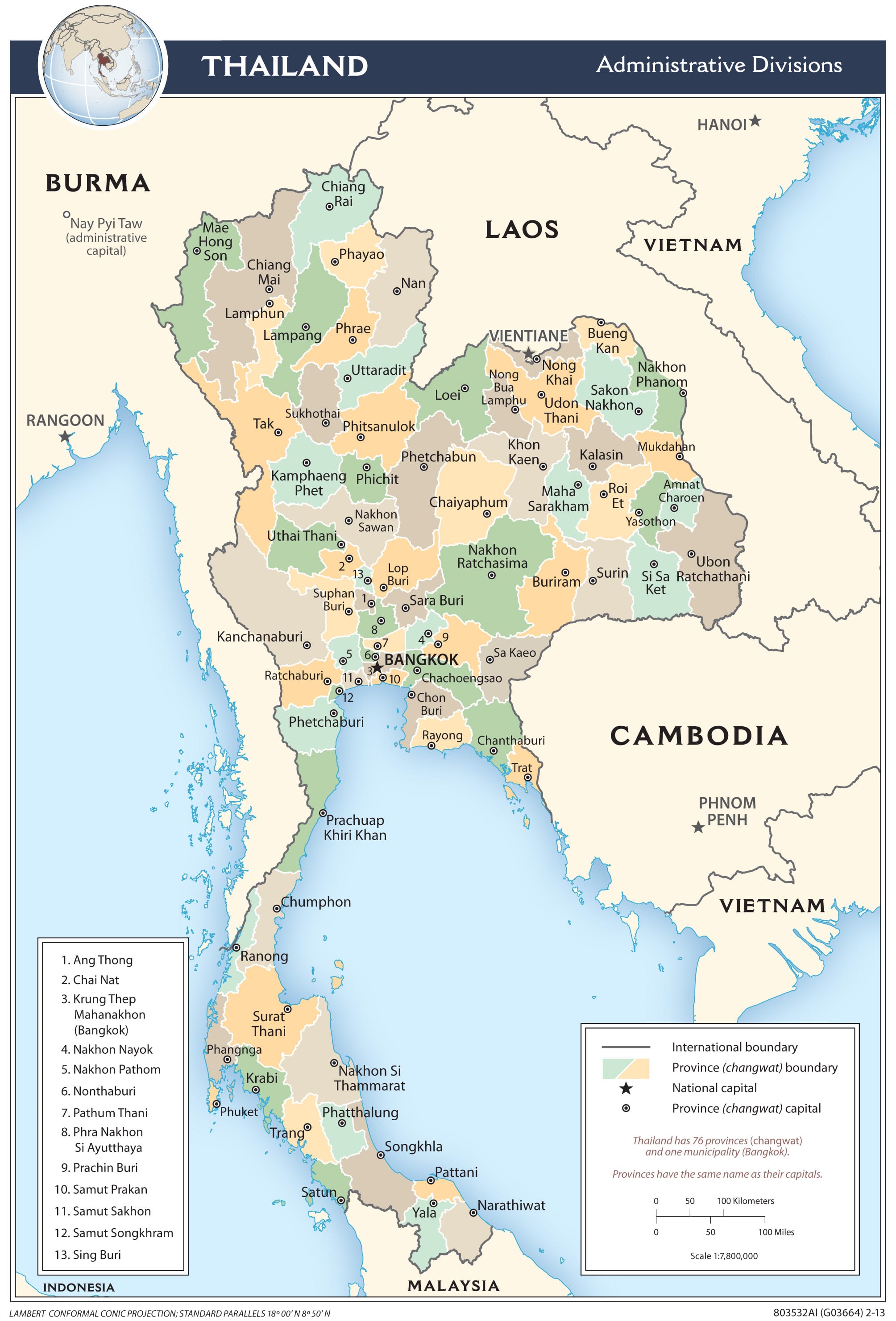
From October 2022 to September 2023, a total of 41 bat guano fertilizers were collected from 10 provinces located in the north, northeast, west, east, and south of Thailand. The sampling sites were chosen based on their bounding area to neighboring countries (Fig 1). The fertilizers were collected from both agricultural markets and stand-alone shops in urban and rural areas and then put on ice during transport to our laboratory.
The map was sourced from https://www.cia.gov/static/99eb69ecead8f4848ee59a1c90487ed8/thailand-administrative.jpg and is used solely for illustrative purpose.
Detection of bat coronaviruses
Following homogenization, 25 grams of each fertilizer sample were aseptically collected using sterilized spoons to ensure sample integrity. Total viral nucleic acids were subsequently extracted using the High Pure Viral Nucleic Acid Extraction Kit (Roche, Germany), in accordance with the manufacturer’s protocol. This procedure was conducted to facilitate downstream molecular detection of potential zoonotic viral agents present in the organic fertilizer matrix.
Coronavirus RNA extracted from the samples was reverse transcribed into complementary DNA (cDNA) using SuperScript IV Reverse Transcriptase (Invitrogen™, USA) with random hexamer primers to ensure broad coverage of viral genomes. The resulting cDNA was subjected to nested PCR targeting the Spike (S) gene, a conserved region among coronaviruses. The primer sets developed by the authors and presented in Table 1 were employed for amplification in this study.
For Alphacoronaviruses (AlphaCoV), the primer sets included: AlphaCoV-F and AlphaCoV-R1 for the first round. AlphaCoV-F and AlphaCoV-R2 for the second round. For Betacoronaviruses (BetaCoV), First round: BetaCoV-F1 and BetaCoV-R. Second round: BetaCoV-F1 and BetaCoV-R.
PCR amplification was conducted using GoTaq® Green Master Mix (Promega, USA) under standardized thermocycling conditions: initial denaturation at 95°C for 2 minutes, followed by 35 cycles of denaturation at 95°C for 30 seconds, annealing at 50°C for 30 seconds, and extension at 72°C for 30 seconds. A final extension step was performed at 72°C for 5 minutes. This protocol facilitates sensitive detection of coronavirus RNA in environmental and biological samples, contributing to veterinary epidemiological surveillance and zoonotic risk assessment. Post-amplification, PCR products were resolved via agarose gel electrophoresis, visualized, excised from the gel, and purified using the QIAquick® Gel Extraction Kit (Qiagen), ensuring high-quality DNA for downstream sequencing and analysis. PCR products that tested positive for CoV were subjected to direct Sanger sequencing to obtain nucleotide sequences. The resulting sequences were analyzed using the BLAST algorithm against the NCBI nucleotide database to confirm viral identity and assess sequence similarity. For phylogenetic analysis, sequences were aligned with reference BetaCoV genomes retrieved from the NCBI database, including those reported by Hassanin et al., 2024 [15]. A phylogenetic tree was inferred using the Maximum Likelihood approach implemented in the IQ-TREE web server, employing appropriate substitution models selected by ModelFinder. Branch support was evaluated using ultrafast bootstrap approximation to ensure robustness of the inferred topology.
Detection of host species
To identify the animal host species associated with bat BetaCoV-positive guano fertilizer samples, DNA barcoding was performed targeting the mitochondrial cytochrome c oxidase I (COI) gene. The amplification protocol followed the method described by Francis et al., 2010 [16], utilizing specific primers for COI. PCR reactions were carried out using GoTaq® Green Master Mix (Promega, USA) under the following conditions: initial denaturation at 95°C for 2 minutes, followed by 35 cycles of 30 seconds at 95°C, 1 minute at 50°C, and 45 seconds at 72°C, with a final extension at 72°C for 7 minutes.
PCR amplicons were separated using agarose gel electrophoresis to verify product size and integrity. Bands corresponding to the expected size of approximately 650 base pairs were visualized and carefully excised from the gel. These target fragments were then purified using the QIAquick® Gel Extraction Kit (Qiagen), yielding high-quality DNA suitable for downstream applications such as next-generation sequencing and host species identification through COI barcoding. Animalia sequences of COI that had been recorded worldwide were obtained from the NCBI and used as references (S1 File).
Next generation sequencing and data analyses
The purified COI PCR products were further processed using the Agencourt AMPure XP reagent (Beckman Coulter, Brea, CA, USA) in accordance with the instructions provided by the manufacturer. Sequencing libraries were prepared from purified COI amplicons using the NEBNext® Ultra™ II DNA Library Prep Kit for Illumina® (New England Biolabs, Massachusetts, USA) with unique dual indices, following the manufacturer’s instructions. Library construction comprised end repair, dA-tailing, adapter ligation, and limited-cycle PCR enrichment. Indexed libraries were sequenced on an Illumina® MiSeq with the MiSeq Reagent Kit v2 (500 cycles; 2 × 250 bp). Base calling and demultiplexing were performed with MiSeq Reporter, and raw reads were exported in FASTQ format. Using CLC Genomics Workbench v10.1.1 (Filgen, Nagoya, Japan), all analyses were carried out. Read trimming and quality control include adapter trimming and the removal of low-quality bases using CLC parameters Reads with undecipherable bases (N), reads outside the predicted range of COI lengths, and reads that were obviously identical were not included. The bat species reference sequences were culled from the National Center for Biotechnology Information (NCBI). Sequences that were unusually lengthy were removed and duplicate copies were eliminated. To assign and map the merged readings to the curated COI reference set, penalties that were compatible with the merging settings were applied (CLC “Map Reads to Reference”). Coverage per base, average depth, and mapping % were all included for each reference point. Segmental BLASTn was used to check against the COI database for any PCR or merger artifacts, and coverage-break algorithms were used to identify probable chimeras. Sequences showing 89.00%–100.00% similarity were grouped as a single haplotype of host mitochondrial DNA, following the criteria established by Yassin et al., 2010 [17]. This analytical pipeline enabled precise identification of bat host species contributing to the guano samples.
Results
A total of 41 bat guano fertilizer samples were obtained from 10 provinces across regions of Thailand, especially in the provinces located near the border of Thailand-Myanmar, Thailand-Laos, Thailand-Cambodia, and Thailand-Malaysia, except for Sakon Nakhon (Fig 1). All the samples were subjected to screening for bat AlphaCoV and bat BetaCoV partial genome sequencess using the specific primers for the Spike (S) gene. The results showed that 2 samples (2/41; 4.88%) obtained from different local agriculture markets – MH1 and NK3 were positive for the bat AlphaCoV, while the bat BetaCoV partial genome sequences was detected only from a sample obtained from the local agriculture market in Loei province (1/41; 2.44%) – LY3 by the reverse transcriptase PCR (RT-PCR). The sample MH1 and NK3 were homologous to Bat alphacoronavirus isolate BACV/CH0008 (Acesssion No. MT708749) and Bat alphacoronavirus isolate BACV/CH002 (Acesssion No. MT708749) with 97.08% and 99.27% similarity, respectively. While the sample LY3 was identified as positive for the bat BetaCoV partial genome sequence with 98.91% identities to BetaCoV strain BtRf-BetaCoV/HeN2013 (Accession no. KJ473817).
Given the greater public health relevance of BetaCoV compared to AlphaCoV, the nucleotide sequence of LY3 was deposited in the GenBank database through the NCBI website and designated as THLY3 strain with the GenBank Accession No. PV730171. Then, the strain was further analyzed for the viral genomic evolution and host species identification. The viral THLY3 strain identified in this study demonstrated a close genetic relationship to the sarbecoviruses previously detected from the Rhinolophus bats, in China and Korea. Moreover, the genetics of the strain was closer to the strains detected in East Asian countries compared to the Southeast Asian countries. Therefore, the strain was assumed to originate in China and Korea then dispersed to Thailand. This phylogenetic proximity is illustrated in Fig 2, highlighting the potential zoonotic linkage and evolutionary origin of the viral THLY3 strain.
This Maximum Likelihood tree, generated via IQ-TREE, is based on partial Spike gene sequences. Each entry is identified by its GenBank accession number, strain, country, and host. Branch support values are displayed at the respective nodes.
Considering the reported maximum intraspecific divergence of COI sequences ranging from 0.00% to 11.0% [17], a similarity threshold of 89.00%–100.00% was applied to determine which animals were the possible hosts for the BetaCoV THLY3 strain. Reads with less than 89.00% similarity to reference COI sequences were excluded to ensure taxonomic accuracy. After filtering, a total of 88 high-confidence reads were classified within the Order Chiroptera. These sequences corresponded to multiple bat species as shown in Table 2. This diversity highlights the presence of multiple rhinolophid bat species contributing to the guano fertilizer samples.
BLAST analysis confirmed that one of the consensus sequences exhibited 100% nucleotide identity with Rhinolophus coelophyllus voucher EBD 23517 (GenBank Accession No. HM541556), previously reported in Southeast Asia [16]. The sequence has been deposited in the NCBI GenBank database under the designation Rhinolophus coelophyllus isolate THLY3 (GenBank Accession No. PQ311712).
In addition, the possibility that the excrement of other animal species could be contaminated in the BetaCoV positive sample and serve as potential viral hosts was considered; the sequences were mapped to reference genomes from the Order Rodentia and the Class Insecta (S2 File), which may share habitats and/or serve as food with the Chiroptera. However, the consensus sequences resembling those of these animals showed less than 89% similarity.
Discussions
This study revealed extensive detection of bat coronavirus genomes in guano-based fertilizers sourced from Thailand, with minimal evidence suggesting contamination from non-bat animal waste. Although there have been no reported cases of illness linked to bat guano fertilizer or the sampling sites, monitoring the spread of bat-borne coronaviruses is critically important for prevention and serves as an early warning of potential future outbreaks for farmers and individuals working with bat guano-based fertilizers. Rhinolophus coelophyllus is proposed as a potential natural reservoir for the bat BetaCoV THLY3 strain identified in the sample collected from Loei province, which is located in the northeastern part of Thailand, and is the border between the Kingdom of Thailand and the Lao People’s Democratic Republic. The species is commonly known as the arched horseshoe bat, and found in mainland Southeast Asia, including Thailand, Laos, Cambodia, and Vietnam. A recent phylogeographic study suggested that R. coelophyllus and related species exhibit high dispersal capacity, with genetic evidence showing limited geographic structure across populations in Southeast Asia. This implies that the species can move across large areas, potentially facilitating the spread of viruses they may carry [18].
Since the guano fertilizers was not collected directly from bat carcasses, the possibility of mixed excrement from other animal species could not be entirely excluded. The next-generation sequencing (NGS) was carried out to identify the primary host of the guanos. The analysis targeted a 650 bps region of the mitochondrial COI gene, a well-established DNA barcode marker for identifying species. In 2010, Francis et al. [16] demonstrated its effectiveness in distinguishing animal species in Southeast Asia. Its utility in distinguishing among diverse taxa has been validated across multiple studies [19,20].
Considering why the rodents and insects were expected as the host of the BetaCoV. Bats and rodents often co-inhabit caves, attics, and tree hollows. This overlap increases the chance of rodent biological material (feces, urine, hair, saliva) mixing with bat guano. In addition, rodents may feed on bat guano, especially in nutrient-poor environments, leading to DNA transfer through saliva or contact [21,22,23]. Most bats, especially microbats, are insectivores. They feed on a wide variety of insects, including mosquitoes, moths, beetles, flies, crickets, and spiders [24,25]. However, insectivorous bats have a feeding time of 20.30–462.70 minutes and can consume 3.60–8.00g/day or 4.20–7.60 insects/minute [26]. Given the potential for DNA from ingested insects or incidental insect contamination within guano samples, the proportion of host DNA—specifically from the intestinal epithelium of bats—may be comparatively lower. Despite this, the predominance of Rhinolophus coelophyllus sequences among the filtered reads strongly suggests that this species is the principal contributor to the guano. The minimal presence of DNA from other vertebrate sources supports the conclusion that cross-contamination from non-bat excreta was negligible, reinforcing the guano’s species-specific origin.
Based on the phylogenetic analysis presented in Fig 2, the virus strain PV730171 identified in this study clusters within the same clade as other BetaCoV previously reported in East Asia, showing the high genetic similarity to a strain detected in China and Korea. Three hypotheses are proposed regarding the origin of the fertilizer sample containing this virus. First, the fertilizer may have originated from Rhinolophus bats residing in China and/or Korea and subsequently been transported to agricultural markets in Southeast Asian countries, including Thailand. Second, it is plausible that the bats themselves migrated from China and/or Korea to Southeast Asia. Bats possess several biological traits that facilitate long-distance movement and viral dissemination, including seasonal migration in search of food resources [27]. Rhinolophus spp. typically travel 20–30 kilometers between seasonal roosts, with maximum recorded movements reaching up to 180 kilometers [18]. These bats frequently co-roost with other Rhinolophus spp. and with Miniopterus fuliginosus, which are known carriers of various pathogens [28]. Such interspecies interactions may promote viral exchange and facilitate pathogen spread across regions [5,29]. Third, anthropogenic factors such as public transportation may contribute to bat translocation. As reviewed by Constantine, 2003 [30], bats may be inadvertently transported via ships, shipping containers, or aircraft. Documented cases include bats roosting on vessels or being discovered aboard aircraft, such as the eastern pipistrelle bat found on a flight from Mexico to Texas. These mechanisms represent potential pathways for cross-border movement and pathogen dissemination.
Nevertheless, this study highlights the potential public health risk associated with bat guano fertilizers available in agricultural markets, suggesting they may serve as a source of BetaCoV. Given the possibility of human and animal exposure through handling or environmental contact, these findings underscore the importance of implementing robust surveillance, preparedness, and preventive measures. Although the precise origin of the detected virus remains undetermined, proactive strategies should be prioritized to mitigate future zoonotic threats and safeguard public health such as strict adherence to personal protective measures, including gloves, masks, and protective clothing, is essential for individuals involved in guano collection, handling, and application. Centralized industrial processing under biosecure conditions, coupled with sealed packaging, can minimize environmental contamination and human exposure. Regulatory frameworks should mandate pathogen testing and establish quality standards for guano-based fertilizers, supported by ongoing surveillance of bat populations and fertilizer products. Additionally, farmer education programs and public health campaigns are critical to raise awareness of zoonotic risks and promote safe handling practices. Furthermore, conducting serological surveys in areas with confirmed CoV presence is recommended to evaluate potential health risks among local populations. In addition, implementing full vaccination strategies should be considered as a preventive measure against future outbreaks.
Supporting information
S1 File. List of reference sequences for species of Animalia.
https://doi.org/10.1371/journal.pone.0344265.s001
(XLSX)
S2 File. List of reference sequences for species of Rodentia and Insecta.
https://doi.org/10.1371/journal.pone.0344265.s002
(XLSX)
Acknowledgments
We sincerely appreciate the technical support and assistance provided by the staff of the Faculty of Natural Resources, Rajamangala University of Technology Isan, Sakon Nakhon Campus, and the Faculty of Medicine Ramathibodi Hospital, Mahidol University for their invaluable contribution in supplying the necessary facilities and resources.
References
- 1.
Wilson DE, Mittermeier RA, editors. Handbook of the mammals of the world. Vol. 9. Barcelona: Lynx Edicions; 2019. p. 1–1008.
- 2. Gorbunova V, Seluanov A, Kennedy BK. The world goes bats: living longer and tolerating viruses. Cell Metab. 2020;32(1):31–43. pmid:32640245
- 3. Li L, Victoria JG, Wang C, Jones M, Fellers GM, Kunz TH, et al. Bat guano virome: predominance of dietary viruses from insects and plants plus novel mammalian viruses. J Virol. 2010;84(14):6955–65. pmid:20463061
- 4. Han H-J, Wen H, Zhou C-M, Chen F-F, Luo L-M, Liu J, et al. Bats as reservoirs of severe emerging infectious diseases. Virus Res. 2015;205:1–6. pmid:25997928
- 5. Kimprasit T, Nunome M, Iida K, Murakami Y, Wong M-L, Wu C-H, et al. Dispersal history of Miniopterus fuliginosus bats and their associated viruses in east Asia. PLoS One. 2021;16(1):e0244006. pmid:33444317
- 6. Simon J, Pooja V, Khannam A, Thulsiram , Harsha TS. Efficacy of bat guano as a plant fertiliser on growth of Fenugreek (Trigonella Foenum-Graecum L.) in sustainable agriculture. J Agr Ecol Res Inter. 2024;25(6):147–55.
- 7. Dimkić I, Fira D, Janakiev T, Kabić J, Stupar M, Nenadić M, et al. The microbiome of bat guano: for what is this knowledge important? Appl Microbiol Biotechnol. 2021;105(4):1407–19. pmid:33512572
- 8. Dietrich M, Kearney T, Seamark ECJ, Paweska JT, Markotter W. Synchronized shift of oral, faecal and urinary microbiotas in bats and natural infection dynamics during seasonal reproduction. R Soc Open Sci. 2018;5(5):180041. pmid:29892443
- 9. Dietrich M, Markotter W. Studying the microbiota of bats: accuracy of direct and indirect samplings. Ecol Evol. 2019;9(4):1730–5. pmid:30847068
- 10. Wacharapluesadee S, Sintunawa C, Kaewpom T, Khongnomnan K, Olival KJ, Epstein JH, et al. Group C betacoronavirus in bat guano fertilizer, Thailand. Emerg Infect Dis. 2013;19(8):1349–51. pmid:23880503
- 11. Tan CS, Noni V, Anwarali-Khan FA, Denel A, Sathyiya-Seelam JS. The discovery of novel coronaviruses in bat guano, Sarawak, Malaysian Borneo. Int J Infect Dis. 2022;116:S102–3.
- 12. Castillo G, Mora-Díaz JC, Breuer M, Singh P, Nelli RK, Giménez-Lirola LG. Molecular mechanisms of human coronavirus NL63 infection and replication. Virus Res. 2023;327:199078. pmid:36813239
- 13. Kudagammana HDWS, Thevanesam V, Chu DKW, Eriyagama NB, Peiris JSM, Noordeen F. Coronaviruses in guano from Pteropus medius bats in Peradeniya, Sri Lanka. Transbound Emerg Dis. 2018;65(4):1122–4. pmid:29498228
- 14. Valitutto MT, Aung O, Tun KYN, Vodzak ME, Zimmerman D, Yu JH, et al. Detection of novel coronaviruses in bats in Myanmar. PLoS One. 2020;15(4):e0230802. pmid:32271768
- 15. Hassanin A, Tu VT, Görföl T, Ngon LQ, Pham PV, Hang CT, et al. Phylogeography of horseshoe bat sarbecoviruses in Vietnam and neighbouring countries. Implications for the origins of SARS-CoV and SARS-CoV-2. Mol Ecol. 2024;33(18):e17486. pmid:39161178
- 16. Francis CM, Borisenko AV, Ivanova NV, Eger JL, Lim BK, Guillén-Servent A, et al. The role of DNA barcodes in understanding and conservation of mammal diversity in southeast Asia. PLoS One. 2010;5(9):e12575. pmid:20838635
- 17. Yassin A, Markow TA, Narechania A, O’Grady PM, DeSalle R. The genus Drosophila as a model for testing tree- and character-based methods of species identification using DNA barcoding. Mol Phylogenet Evol. 2010;57(2):509–17. pmid:20800099
- 18. Hassanin A, Tu VT, Curaudeau M, Csorba G. Inferring the ecological niche of bat viruses closely related to SARS-CoV-2 using phylogeographic analyses of Rhinolophus species. Sci Rep. 2021;11(1):14276. pmid:34253798
- 19. Krishnamurthy PK, Francis RA. A critical review on the utility of DNA barcoding in biodiversity conservation. Biodivers Conserv. 2012;21:1901–19.
- 20. Saigal M, Shueh Yi HN, Rameez NA, van Manen S, Van Anh BT, Arora VP, et al. Beneath the surface: DNA barcoding of shark fins in Singapore. R Soc Open Sci. 2024;11(9):240532. pmid:39233723
- 21. Pretorius M, Markotter W, Keith M. Assessing the extent of land-use change around important bat-inhabited caves. BMC Zool. 2021;6(1):31. pmid:34840806
- 22. Schorr RA, Warren ZA, Goodwin K, Murdock E, Neubaum DJ. Collaborative conservation of cave-roosting bats: guidance on managing rock climbing near caves. Front Conserv Sci. 2025;6:1411427.
- 23. Labadie M, Morand S, Bourgarel M, Niama FR, Nguilili GF, Tobi N, et al. Habitat sharing and interspecies interactions in caves used by bats in the Republic of Congo. PeerJ. 2025;13:e18145. pmid:39802183
- 24. Gonsalves L, Bicknell B, Law B, Webb C, Monamy V. Mosquito consumption by insectivorous bats: does size matter? PLoS One. 2013;8(10):e77183. pmid:24130851
- 25. Wray AK, Jusino MA, Banik MT, Palmer JM, Kaarakka H, White JP. Incidence and taxonomic richness of mosquitoes in the diets of little brown and big brown bats. J Mammal. 2018;99(3):668–74.
- 26. Encarnação JA, Dietz M. Estimation of food intake and ingested energy in Daubenton’s bats (Myotis daubentonii) during pregnancy and spermatogenesis. Eur J Wildl Res. 2006;52:221–7.
- 27. Calisher CH, Childs JE, Field HE, Holmes KV, Schountz T. Bats: important reservoir hosts of emerging viruses. Clin Microbiol Rev. 2006;19(3):531–45. pmid:16847084
- 28. Lo VT, Yoon S-W, Noh JY, Kim Y, Choi YG, Jeong DG, et al. Long-term surveillance of bat coronaviruses in Korea: diversity and distribution pattern. Transbound Emerg Dis. 2020;67(6):2839–48. pmid:32473082
- 29. Jagadesh S, Cataldo C, Van Bortel W, Van Kleef E, Wint W, Rizzoli A, et al. Mapping global risk of bat and rodent borne disease outbreaks to anticipate emerging threats. Sci Rep. 2025;15(1):20534. pmid:40596082
- 30. Constantine DG. Geographic translocation of bats: known and potential problems. Emerg Infect Dis. 2003;9(1):17–21. pmid:12533276